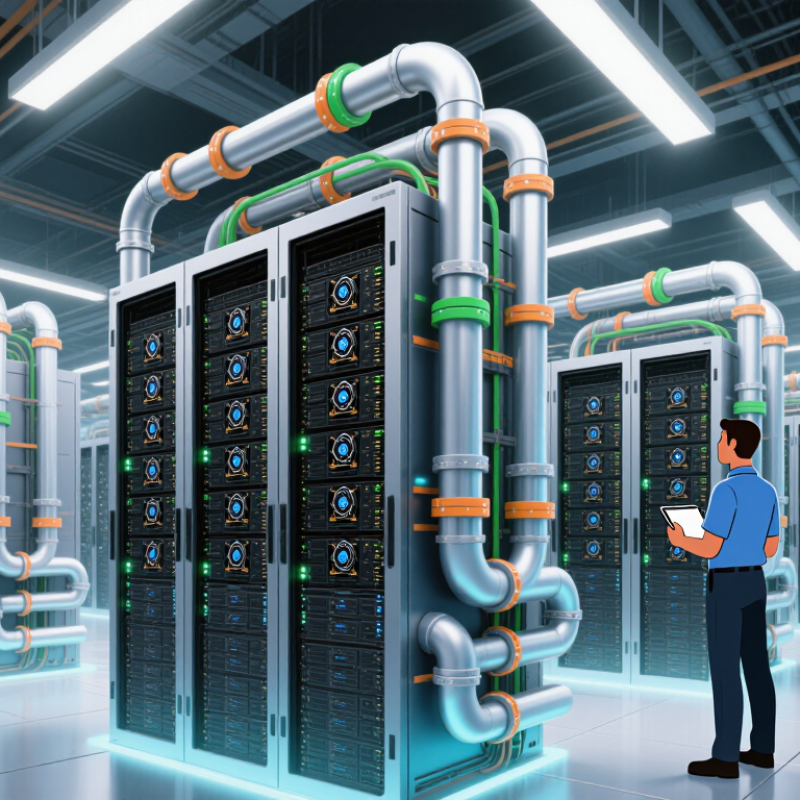
A cloud AI server manufacturer designs and builds the hardware systems that power artificial intelligence in cloud data centers. Its work goes beyond assembling servers. It selects processors, memory, networking components, and cooling systems, then tests how they perform together under sustained workloads. A rack may contain dense GPU servers, fiber connections, and liquid-cooling pipes. Every component affects speed, power use, and reliability.
The market is expanding, but headline figures need context. IDC’s Worldwide AI and Generative AI Spending Guide projected global AI spending would reach $632 billion by 2028, with a 29% compound annual growth rate from 2024 to 2028. That forecast covers AI hardware, software, and services—not server manufacturing alone. Still, it signals why cloud providers are investing in infrastructure built for training and running AI models. The label can mislead. A supplier’s capabilities depend on more than its product catalog; integration, testing, and ongoing support matter too.
NVIDIA CEO Jensen Huang has described the broader shift this way: “The data center is the new unit of computing.” For buyers, that means evaluating a cloud AI server manufacturer as an infrastructure partner, not simply a box vendor. Ask how its systems handle heat, power constraints, network traffic, and workload changes. Request performance results under conditions that resemble your own. A polished specification sheet is useful, but it cannot answer everything. Real deployments can expose trade-offs that benchmarks miss. That is worth remembering.
What Defines a Cloud AI Server Manufacturer?
A cloud AI server manufacturer develops or builds systems designed to run artificial intelligence workloads in data centers. Its work goes beyond installing accelerators in a chassis. Engineers must balance processors, memory, storage, networking, power delivery, and cooling. A server can look impressive on a specification sheet yet throttle under sustained workloads. That matters.
The manufacturer should explain how systems are tested, including workload conditions, temperatures, and power use. It may design the platform and assemble it, while sourcing components from other suppliers. The label can be fuzzy. Look for clear documentation, compatibility checks, firmware maintenance, and support plans. Strong technical claims should be tied to measurable results, not vague promises of speed. Some details, such as a customer’s exact workload, may still require careful evaluation.
Tips: Ask for thermal and performance test conditions. Confirm which components can be replaced, how updates are handled, and whether the proposed configuration matches your models and data pipeline. A small pilot can reveal practical issues that a specification sheet misses.
Core Hardware and Software in Cloud AI Servers
A cloud AI server manufacturer designs and integrates machines that run workloads in shared data centers. The work extends beyond fitting accelerators into a chassis. Engineers balance processors, high-bandwidth memory, network adapters, storage, power delivery, and cooling. A poorly matched network can leave expensive processors waiting for data. Heat matters. Rack airflow, liquid-cooling loops, and power limits shape how many servers a site can operate reliably.
Software is equally important. Firmware, accelerator drivers, container tools, workload schedulers, and monitoring systems help teams deploy models and track utilization. The Stanford Institute for Human-Centered AI’s 2024 AI Index Report found that training compute for notable AI models has doubled roughly every five months. That trend makes scalable systems valuable, but it does not mean every workload needs the largest server. Smaller inference jobs may benefit more from memory capacity, fast storage, and efficient scheduling. Specifications alone can mislead; real workload testing is essential.
Tips: Ask for measured performance under your model’s workload, not just peak accelerator figures. Check memory bandwidth, interconnect speed, power draw, cooling requirements, and software compatibility. Then test a full rack if possible. One weakness remains easy to overlook: results can change with data, software versions, and operating conditions.
How Cloud AI Servers Are Designed and Built
A cloud AI server is designed around the work it must handle, not just its component list. Engineers estimate model size, parallel workloads, and data movement before choosing accelerators, processors, memory, and storage. Fast links between components matter because idle compute still consumes power. The rack layout also sets limits for electrical supply, cooling, and service access. Small choices matter. A narrow cable path can obstruct airflow, while tightly packed hardware can make repairs slower. Heat is unforgiving.
During manufacturing, technicians assemble boards, install cooling parts, route cables, and load approved firmware. Each connection needs to be secure and easy to inspect. The finished system is checked for power delivery, network performance, and stable operation under sustained workloads. Testing may reveal uneven temperatures or fans that become too loud at peak load. There is always a compromise. A design optimized for density may be harder to cool or service. Careful testing reduces risk, but it cannot reproduce every customer’s data center or workload. Manufacturers should document those limits clearly, including supported configurations and environmental requirements. A technician may still find a loose connection or an unexpected hotspot, so inspection records and repeatable test procedures remain useful.
How Manufacturers Support Cloud Deployment and Operations
A cloud AI server manufacturer supports more than hardware delivery. Its engineers help match processors, accelerators, memory, and network cards to a workload before deployment. They can validate configurations, check rack dimensions, and provide firmware settings that fit the customer’s cloud environment. This reduces avoidable surprises, such as a server drawing more power than a rack can supply. Small details matter.
During rollout, manufacturers may assist with imaging, remote management setup, and workload testing. A practical test could track model response time, accelerator temperature, and power use under sustained demand. After deployment, clear diagnostics and replacement procedures help operations teams respond when a fan fails or a component reports errors. Monitoring still needs customer ownership; a vendor cannot know every application’s normal behavior. A checklist can miss things, too.
Tips: Confirm support hours, spare-part availability, firmware update procedures, and compatibility requirements before ordering. Ask for test results using workloads similar to yours, not only peak-performance figures. Keep logs searchable. Review cooling and power readings after installation, then compare them with expected ranges. The right manufacturer supports steady operations, but teams should document local lessons as they go.
How Cloud AI Server Manufacturers Support Deployment and Operations
This illustrative breakdown shows how support effort may be distributed across a cloud AI server lifecycle. Actual priorities vary by deployment.
How Cloud AI Server Manufacturers Differ from Other Suppliers
A cloud AI server manufacturer designs and builds servers for large-scale artificial intelligence workloads. Its role extends beyond assembling components. Engineers consider accelerator density, power delivery, cooling, memory bandwidth, and high-speed networking together. A rack may draw substantial power and produce concentrated heat, so airflow paths and service access matter. Small design choices can affect uptime.
That matters. A general hardware supplier may sell standard servers or source systems from several makers. A cloud AI server manufacturer typically validates complete configurations, including accelerator layouts, firmware, cabling, and rack-level cooling. It may also support repeatable deployments across many racks. This differs from a distributor, which mainly handles sourcing and delivery, or an integrator, which combines products from different vendors for a particular project. The boundaries are not always clear.
Buyers should ask for test data, power and thermal limits, repair procedures, and component availability. They should also check whether support covers the full server configuration, rather than only individual parts. Specifications can still mislead. A system that performs well in a lab may behave differently in a crowded data center. No manufacturer can remove every operational risk, and that deserves an honest conversation.
FAQS
It designs or builds servers for AI workloads in data centers. The work includes processors, memory, networking, power, and cooling.
It often validates the complete system, including accelerator layouts, firmware, and cabling. A general supplier may sell standard servers or source systems from multiple makers.
Ask about workload, temperature, and power conditions. A speed figure without those details can be misleading.
Dense server racks produce concentrated heat and draw substantial power. Poor airflow can affect performance and uptime. Small details matter.
Not necessarily. It may design and assemble the platform while sourcing components elsewhere. The boundaries can be fuzzy.
Confirm firmware update plans, repair procedures, component availability, and which parts can be replaced. Ask whether support covers the full server configuration.
No. A crowded rack may behave differently from a lab setup. I would not treat one clean test as a promise.
Compare the proposed configuration with your models and data pipeline. A small pilot can reveal issues a specification sheet misses. It may still miss something.
Conclusion
A cloud AI server manufacturer designs and builds computing systems optimized for artificial intelligence workloads in cloud environments. These servers combine powerful processors and accelerators with high-speed memory, storage, networking, and software that helps manage demanding AI tasks. Their design must balance performance, scalability, energy efficiency, and reliability so organizations can train and run AI models across expanding infrastructure.
Manufacturers also support deployment and ongoing operations by providing system integration, configuration guidance, monitoring tools, maintenance, and technical assistance. This support helps customers fit servers into data centers and manage them effectively over time. Unlike suppliers that provide only individual components or general-purpose servers, a cloud ai server manufacturer focuses on complete, AI-ready platforms designed to work at scale in cloud settings.
 Datrix
