Datrix Datrix

How to Choose Leading AI Server Companies?

Time:2026-09-29 Author:Henry
0%

Choosing among leading ai server companies requires more than comparing processor names or glossy performance charts. Buyers must examine the complete system: accelerators, memory capacity, networking, cooling, software support, security, and service response. A powerful server can still disappoint if its drivers are unstable or its power demands exceed the facility’s design. Look closely.

Jensen Huang, NVIDIA’s founder and CEO, has described artificial intelligence as “the most powerful technology force in history.” His statement reflects the scale of today’s infrastructure shift, but it should not end the evaluation. The best supplier depends on workload, budget, deployment speed, and technical capability. Training large language models may require dense GPU clusters, high-speed interconnects, and advanced liquid cooling. Inference workloads may favor energy efficiency, compact designs, and predictable latency. Independent benchmarks, warranty terms, rack-density figures, and customer references provide stronger evidence than marketing claims. Ask how the company handles firmware updates, component shortages, and failures at 2 a.m. That detail matters.

Experience also reveals uncomfortable limits. There is no universally best server company. Even respected vendors can struggle with delivery schedules, compatibility, or support quality in certain regions. A careful buyer should test a small deployment before committing to a large purchase. Review total ownership costs, including electricity, cooling, licensing, maintenance, and staff training. This guide compares leading ai server companies through those practical criteria. It also questions common assumptions, because the fastest configuration is not always the most reliable or economical choice.
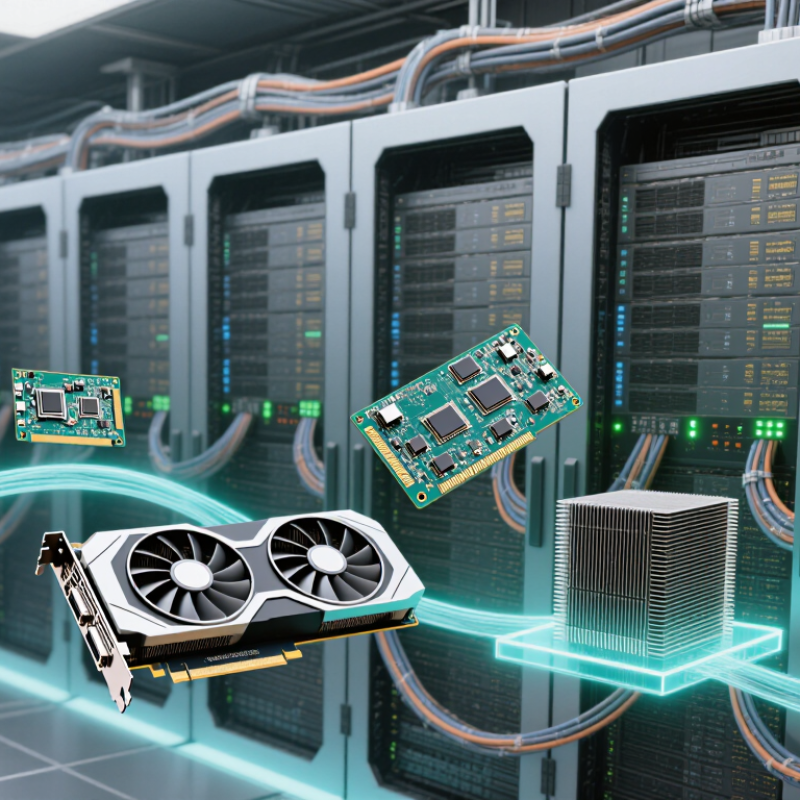
How to Choose Leading AI Server Companies?

What Defines a Leading AI Server Company?

A leading AI server company is defined by how well its systems perform in real workloads, not by impressive specifications alone. Its engineers should understand model size, memory needs, networking, and cooling requirements before recommending a configuration. During a pilot, measure response time, throughput, power use, and stability across sustained workloads. Peak throughput alone can mislead. Memory bandwidth and accelerator links matter, too. Small details count: can a technician replace a fan without removing neighboring components?

Trust also depends on clear documentation, realistic delivery estimates, and responsive technical support. Ask how the company validates firmware updates, handles hardware failures, and plans for future capacity. Useful evidence includes workload-specific test results, service-response targets, and a transparent explanation of performance trade-offs. I would not treat a polished benchmark as proof; test your own models and data patterns whenever possible. Even careful testing has blind spots. A capable supplier should acknowledge them, explain what remains uncertain, and help customers revisit decisions as workloads change.

Which Hardware and Software Capabilities Should You Compare?

Compare server hardware under the workloads you actually run, not headline specifications alone. Check accelerator type and count, memory capacity, bandwidth, CPU balance, and support for high-speed networking. A model with many accelerators can still stall when data arrives slowly. Ask for sustained throughput, power draw, and performance under your expected batch sizes. Review cooling design, rack density, power redundancy, and component replacement procedures. These details affect uptime and operating cost.

Tips: Request a test using your own model and representative data. Measure tokens per second, latency, utilization, and energy use. Check results at normal and peak demand. Small tests help.

Software matters just as much. Compare support for your frameworks, drivers, orchestration tools, monitoring, and security updates. Confirm that administrators can schedule workloads, isolate teams, track failures, and recover from interrupted jobs. Ask how upgrades are validated and how long older configurations receive support. Clear documentation and responsive technical support reduce deployment risk. It is easy to overvalue peak benchmark scores; real workloads may behave differently. Some comparisons remain imperfect, so record assumptions and retest after configuration changes. Choose the system that fits your team’s skills and service needs, not simply the largest specification sheet.

How to Choose Leading AI Server Companies? Which Hardware and Software Capabilities Should You Compare?

Compare networking and expansion capabilities alongside software support—not just headline compute specifications.

How to read the chart: The bars show nominal theoretical one-way link throughput. Ethernet rates are converted from gigabits per second to gigabytes per second; PCIe values represent theoretical x16 bandwidth. Protocol overhead and real workload performance are not included, so these figures are not direct measures of AI training speed.

Also compare software capabilities: supported AI frameworks and drivers, cluster scheduling and orchestration, model deployment tools, monitoring and diagnostics, security updates, and the length of the support lifecycle.

How Should You Assess Performance, Scalability, and Reliability?

Choosing a leading AI server company requires more than comparing processor counts. Assess performance through measured workloads, not impressive specifications alone. Ask for benchmark results using models similar to your own. Check response latency, throughput, memory bandwidth, and performance during sustained operation. A server that performs well for ten minutes may slow under continuous demand.

Scalability deserves practical testing. Can the infrastructure support larger models, additional users, and distributed workloads without major redesign? Examine accelerator availability, networking speed, storage capacity, and orchestration tools. Review how quickly resources can be added or removed. Also inspect monitoring systems, maintenance procedures, and technical support response times. These details often reveal operational maturity better than sales presentations.

Tips: Request a live workload demonstration. Measure performance at low, medium, and peak utilization. Ask for service-level records, failure histories, and recovery targets. Confirm data protection practices, access controls, and audit procedures. Reliability is not simply uptime; it includes predictable recovery and clear communication during incidents. Test support before signing a contract. A slow answer is useful evidence. No score is perfect. My own assessment can be biased if it focuses only on speed. Balance technical measurements with operating experience, independent validation, and transparent documentation. Check assumptions twice.

What Factors Determine Total Cost and Long-Term Support?

Choosing leading AI server companies requires measuring total cost, not invoice price. A useful model includes servers, accelerators, memory, networking, racks, power, cooling, software, and labor. Energy deserves special attention. The International Energy Agency estimates that data centers used about 460 TWh globally in 2022. It projects demand could exceed 1,000 TWh by 2026. A high-density rack can therefore change monthly costs quickly. Ask for measured power draw at idle, typical load, and peak load. Do not accept one flattering benchmark.

Long-term support can outweigh a small purchase discount. Check warranty length, replacement times, local spare inventory, firmware access, diagnostic tools, and escalation procedures. Require written service-level targets. Uptime Institute’s Global Data Center Survey 2023 reported that roughly one-quarter of respondents faced outage costs above $1 million. That figure is not universal, but it shows downtime deserves a financial value. Calculate lost production, engineer hours, delayed training, and emergency shipping. Support must cover the whole system, not only the processor.

Compare three- and five-year scenarios. Include utilization, electricity price changes, cooling upgrades, contract renewals, and resale assumptions. MLPerf results can clarify performance, yet they do not reveal integration effort or maintenance burden. A cheaper platform may need more tuning. Sometimes it wins anyway. That uncertainty should be documented, not hidden. Ask suppliers for customer references with similar workloads and inspect their failure-response history. Spreadsheets often look precise while relying on guessed utilization. Recalculate them after a pilot, using actual power readings and support tickets.

How Can You Match a Provider to Your AI Workload?

Choosing a leading AI server company starts with your workload, not a glossy specification sheet. For model training, examine accelerator memory, high-speed interconnects, storage throughput, and cluster scaling. Stanford’s 2024 AI Index Report found that machine learning training compute has doubled roughly every 3.4 months since 2010. That pace makes upgrade paths important. A provider offering today’s fastest server may still create tomorrow’s bottleneck.

Inference needs a different test. Measure response latency, requests per second, batch behavior, and geographic placement. A customer-service model may need steady low latency, while an overnight analytics job can accept slower processing. For example, a 70-billion-parameter model may require substantial memory before serving one request. Ask for tested results using your model, prompt length, and precision settings. Generic benchmark charts are useful, but incomplete.

Energy and reliability deserve equal attention. The International Energy Agency estimates that data centers used about 460 terawatt-hours globally in 2022, potentially exceeding 1,000 terawatt-hours by 2026. Compare power usage, cooling design, carbon reporting, and outage history. My own evaluation mistake was focusing too heavily on hourly pricing. Cheap capacity becomes expensive when utilization is poor, data transfer is slow, or support cannot diagnose failures quickly. Request a short pilot with production-like traffic, clear service credits, security controls, and exit terms. No provider fits every workload.

FAQS

What makes an AI server supplier reliable?

Reliability depends on real workload performance, clear documentation, and responsive technical support. Test response time, throughput, power use, and stability. Specifications alone can mislead.

Which hardware details should buyers compare?

Compare accelerator count, memory capacity, memory bandwidth, CPU balance, and networking speed. Also inspect cooling, rack density, power redundancy, and replacement procedures. Small details matter.

Why should buyers test their own models?

Public benchmarks may not match your data patterns or batch sizes. Use representative models and measure latency, utilization, tokens per second, and energy use. Results can still have blind spots.

How does memory affect AI server performance?

Insufficient memory can slow models, even with many accelerators installed. Slow data movement may create waiting time between processors. More hardware does not always mean faster results.

What software capabilities deserve attention?

Check framework support, drivers, monitoring, workload scheduling, team isolation, and security updates. Administrators should track failures and recover interrupted jobs. Documentation should be practical.

How should total ownership cost be calculated?

Include servers, accelerators, networking, racks, electricity, cooling, software, and labor. Measure power at idle, normal load, and peak load. One attractive figure is not enough.

What support terms should customers request?

Review warranty length, replacement times, spare-part availability, diagnostic tools, and escalation procedures. Ask for written response targets. Support must cover the complete system.

How can buyers plan for changing workloads?

Compare three-year and five-year costs, including utilization changes, electricity prices, upgrades, renewals, and resale assumptions. Revisit the plan after a pilot. Forecasts are imperfect.

What maintenance detail can reveal practical quality?

Ask whether a technician can replace a cooling fan without removing nearby components. Check firmware validation and failure-response history. A polished demonstration proves little.

Conclusion

Choosing among leading ai server companies requires more than comparing processor counts or headline specifications. A strong provider should demonstrate expertise in AI infrastructure, offer balanced hardware and software capabilities, and support the frameworks, accelerators, storage, networking, and management tools required by your workloads. Evaluate performance using realistic training and inference benchmarks, then examine scalability, system stability, service availability, security practices, and the ability to expand as demand grows.

Total cost should include hardware, energy, cooling, software licensing, maintenance, support, and future upgrades rather than focusing only on the initial purchase price. Long-term value also depends on warranty coverage, technical assistance, replacement procedures, and transparent service agreements. Finally, match each provider to your specific goals, whether they involve model development, high-volume inference, data analysis, or private deployment. The best choice is the company that delivers dependable performance, practical scalability, predictable costs, and support aligned with your organization’s technical and operational requirements.

Henry

Henry

Henry is a dedicated marketing professional with a profound expertise in the company's offerings. With years of experience in the industry, he possesses an impressive understanding of the market dynamics and consumer behaviors that drive success. Henry is committed to sharing his insights through......