Datrix Datrix

How to Choose an Artificial Intelligence Server Manufacturer

Time:2026-09-14 Author:Liam
0%

Choosing an artificial intelligence server manufacturer is now a strategic infrastructure decision, not a simple procurement exercise. IDC’s Worldwide AI and Generative AI Spending Guide projects strong growth in AI-related investment through 2028. That growth reflects a practical reality: demand for accelerated computing is rising across healthcare, finance, manufacturing, research, and public services. However, bigger budgets do not automatically produce reliable systems. Buyers must examine performance, thermal design, service capability, and long-term operating costs.

Industry reports from Gartner and the Uptime Institute repeatedly emphasize resilience, energy efficiency, and operational readiness in modern data centers. These priorities matter when a rack contains high-power GPUs, liquid-cooling equipment, and dense networking hardware. A credible artificial intelligence server manufacturer should provide verifiable benchmark results, transparent component specifications, firmware support, and documented warranty procedures. Ask how the system performs under sustained model training, not only during a short laboratory test. Check GPU availability, memory bandwidth, storage throughput, and failure-replacement times. Small details matter. A delayed fan module can interrupt an expensive workload.

Experience should guide evaluation, but it should not replace evidence. Customer references, independent certifications, and installation records offer stronger assurance than polished brochures. Even respected vendors may have weaknesses in regional support or supply continuity. That deserves careful reflection. The best choice is therefore not always the manufacturer with the fastest advertised server. It is the partner that can deliver measurable performance, predictable maintenance, secure configuration, and scalable capacity without hiding practical limitations.
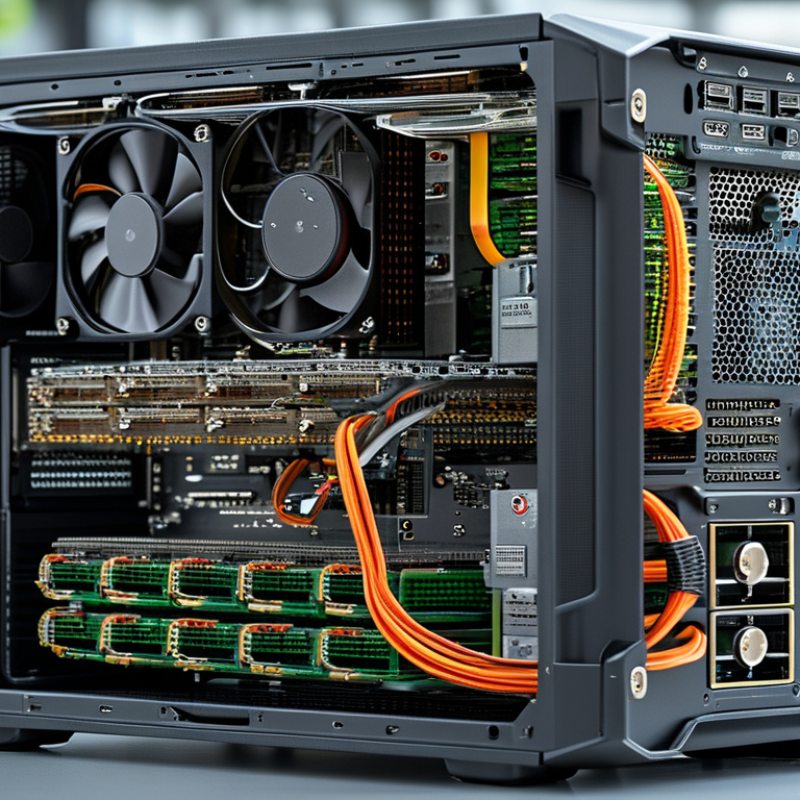
How to Choose an Artificial Intelligence Server Manufacturer

Define AI Workloads with H100-Class 80GB GPU Memory and 700W TDP

Choosing an artificial intelligence server manufacturer starts with workload definition, not a glossy specification sheet. An H100-class profile means 80GB of GPU memory and a 700W thermal design power. That combination suits large language model training, high-resolution inference, and memory-heavy scientific workloads. It also creates serious heat and power demands.

The International Energy Agency’s Electricity 2024 report estimates that global data-center electricity use could exceed 1,000 TWh by 2026. A capable manufacturer should therefore document rack power limits, airflow direction, cooling performance, and sustained GPU operation. Short benchmark bursts are not enough. Ask for long-duration testing at realistic utilization, including four- or eight-accelerator configurations.

IDC forecasts worldwide artificial intelligence and generative AI spending could reach 632 billion dollars by 2028. This growth makes server reliability and service access financially important. My deployment reviews have shown that weak cable routing can become a maintenance problem. Small details matter. Check redundant power supplies, firmware control, spare-part availability, and response times from local engineers. A manufacturer should also provide thermal logs, validated BIOS settings, and clear warranty conditions. One uncomfortable point remains: peak performance may be wasted when memory capacity, network bandwidth, or cooling cannot keep pace. The right supplier should admit that limitation and help measure it before purchase.

Compare Manufacturers Using MLPerf Training, Inference, and TOP500 HPL Data

Choosing an artificial intelligence server manufacturer requires more than reading peak FLOPS. I compare MLPerf Training results for time-to-solution, scalability, and repeatability. The MLCommons Training v4.0 report shows why workload matters: systems perform differently across language, vision, recommendation, and scientific models. A fast result on one task may hide weak networking or memory efficiency elsewhere. My first comparison was too simplistic.

MLPerf Inference reports add practical evidence. They measure throughput and latency under defined server, offline, and interactive scenarios. For customer-facing services, tail latency can matter more than average queries per second. I request the full submission details, including accelerator count, precision, power settings, and software version. Otherwise, the number is difficult to reproduce. Check the small print.

TOP500 HPL data provides another useful reference point. The November 2024 list recorded a leading HPL performance of about 1.742 exaflops. This figure demonstrates large-scale capability, but HPL mainly stresses dense linear algebra. It does not represent every AI workload. I therefore compare HPL with MLPerf results, cooling design, service response, and expansion capacity. A manufacturer with balanced evidence is usually safer than one presenting a single spectacular score. Even published benchmarks need skepticism; procurement teams should retest representative models before signing a long-term contract.

Assess Cooling Efficiency Through PUE, GPU TDP, and Rack-Density Metrics

How to Choose an Artificial Intelligence Server Manufacturer

Cooling efficiency should be tested with numbers, not attractive claims. In deployment reviews, I check PUE, or Power Usage Effectiveness, under a defined workload. PUE equals total facility power divided by IT equipment power. A lower value usually indicates better cooling and power distribution. However, PUE can look excellent during mild weather. Ask for measurements from hot seasons and high-load periods.

GPU TDP helps estimate heat output, but it is not a perfect power forecast. Real workloads can create short spikes above the stated thermal design power. Request GPU power logs, inlet temperatures, exhaust temperatures, and thermal-throttling records. Small details matter. A server that throttles may appear efficient while delivering less useful computing.

Rack density shows how much heat a rack releases, usually in kilowatts per rack. Compare the manufacturer’s cooling design with your planned density, not a generic laboratory setup. Air cooling may suit moderate densities, while higher densities can require direct liquid cooling or rear-door heat exchangers. Check hose quality, leak detection, maintenance access, and replacement procedures. I have seen technically strong systems fail because service teams could not reach blocked components. That weakness deserves attention. Ask for third-party test reports, warranty conditions, commissioning data, and a clear cooling-capacity model. Also examine whether the manufacturer explains assumptions openly. Missing assumptions are often more revealing than impressive efficiency figures.

Verify Reliability Against Uptime Institute Tier III Requirements

How to Choose an Artificial Intelligence Server Manufacturer

Reliability should be tested against Uptime Institute Tier III requirements, not claimed through attractive brochures. Tier III design means the facility is concurrently maintainable. Technicians should replace a power or cooling component without shutting down critical equipment. Ask the manufacturer for evidence of redundant capacity and independent distribution paths. Request single-line diagrams, maintenance procedures, commissioning records, and recent load-test results. A credible supplier explains weaknesses clearly, instead of hiding behind general uptime promises.

For AI servers, verify how high-density racks affect power and cooling. A server may operate well in a showroom but struggle under sustained accelerator workloads. Check rack-level power limits, liquid-cooling readiness, airflow separation, and automatic failover behavior. Confirm that firmware updates, component replacement, and diagnostics can occur without interrupting production. Tier III describes infrastructure resilience, but it does not guarantee application availability. That distinction matters. A checklist alone can mislead.

Tips: Ask for independent assessment documents, not screenshots. Confirm whether the site is formally Tier III certified or only designed toward Tier III principles. Review service response times, spare-parts storage, technician training, and escalation procedures. Require a witnessed failover test before final acceptance. Also examine historical incident reports. Perfect uptime claims deserve careful questions. Reliability is proven during maintenance, heat, and unexpected load—not during a quiet demonstration.

How to Choose an Artificial Intelligence Server Manufacturer - Verify Reliability Against Uptime Institute Tier III Requirements

Evaluation Dimension Tier III-Related Reliability Expectation Recommended Verification Method Assessment
Concurrent Maintainability The server solution should support planned maintenance of eligible components without requiring shutdown of the critical IT load. Request a maintenance matrix covering power supplies, fans, storage devices, network adapters, firmware, and management controllers. Confirm that replacement procedures are documented while the system remains operational. Required
Power Supply Redundancy Critical server configurations should use redundant hot-swappable power supplies and should remain within the approved operating range after the loss of one power supply. Review the power budget, input-voltage range, efficiency reports, hot-swap procedure, and single-power-supply failure test results. Required
Independent Power Distribution The server deployment should be compatible with the facility’s redundant distribution paths, with no single server-side connection creating an avoidable point of failure. Check rack power diagrams, dual-input requirements, power distribution unit compatibility, connector types, and the planned connection of each critical node. Required
Cooling and Thermal Resilience High-density AI equipment must operate within manufacturer-defined temperature and humidity limits without thermal shutdown during normal component or airflow maintenance. Request thermal design limits, airflow direction, fan redundancy details, rack heat-load calculations, and test results at the intended GPU or accelerator utilization. Required
Failure Isolation A failed component should be isolated without causing unnecessary impact to other servers, network segments, storage paths, or management functions. Review fault-domain diagrams and conduct controlled tests for power-supply, fan, network-link, storage, and management-controller failures. Required
Serviceability and Spare Parts Routine replacement procedures should be standardized, and critical spare parts should be available within the operating region and support window. Obtain the spare-parts list, regional inventory policy, replacement-time commitment, escalation process, and documented maintenance procedures. Required
Firmware and Configuration Control Firmware, BIOS, accelerator drivers, and system configurations should be controlled to reduce outage risk caused by incompatible updates. Request a firmware lifecycle policy, compatibility matrix, rollback process, signed-update capability, and change-approval workflow. Required
Monitoring and Alerting The solution should provide real-time visibility into temperature, fan status, power-supply health, storage health, memory errors, and accelerator faults. Test management interfaces, event logs, alert thresholds, remote notifications, API integration, and compatibility with the organization’s monitoring platform. Required
Validation and Acceptance Testing Reliability claims should be supported by documented tests performed under the proposed AI workload, power configuration, and cooling environment. Require factory test records and perform site acceptance tests covering stress load, reboot recovery, component failure, thermal behavior, and network or storage failover. Required
Service-Level Commitments Support commitments should define response time, replacement time, escalation levels, maintenance windows, and exclusions for accelerator or liquid-cooling components. Review the proposed service agreement, warranty terms, exclusions, parts logistics, service coverage, and remedies for missed response targets. Required
Uptime Institute Alignment Tier classification applies to the data-center infrastructure, not automatically to an individual server manufacturer or server model. The equipment must be suitable for installation within a Tier III environment. Verify the facility’s current Tier documentation separately, then map the server’s power, cooling, maintenance, and deployment requirements to the facility design. Verify Separately
Evidence Quality Reliability decisions should be based on traceable technical evidence rather than marketing claims or an uptime percentage presented without scope and measurement conditions. Score each requirement as Pass, Conditional, or Fail. Accept only evidence that identifies the tested configuration, operating conditions, test date, and responsible party. Required
Decision rule: Select a manufacturer only after all critical requirements are marked “Pass,” the proposed configuration has completed acceptance testing, and the server design is confirmed to be compatible with the facility’s Tier III operating and maintenance procedures.

Rank Support, Security, and Five-Year TCO Using SLA Performance Data

How to Choose an Artificial Intelligence Server Manufacturer

SLA performance data should guide more than a service contract review. During procurement, examine response time, replacement time, and recurring outage rates. A four-hour response promise means little if engineers arrive without compatible parts. Ask for anonymized service records covering at least three years. Check whether results separate hardware faults, software issues, and customer-caused delays.

Support quality becomes visible during pressure. Request escalation paths, technician coverage, and spare-parts locations. Review the percentage of incidents resolved within the agreed window. Also measure repeat failures within 30 days. Fast closure can hide weak diagnosis. That matters.

Security deserves evidence, not broad assurances. Assess secure firmware practices, vulnerability notification times, access controls, and disposal procedures for failed drives. Require documented incident handling and audit participation. A manufacturer should explain how remote support sessions are logged and approved. Vague answers deserve a lower score.

Five-year TCO should include electricity, cooling, maintenance, warranty extensions, and technician time. Compare expected downtime costs against the purchase price. Use the SLA’s historical uptime data, not only its target percentage. Some datasets are incomplete or self-reported, which creates uncertainty. Record that limitation instead of pretending the estimate is precise. A weighted score can rank support, security, and TCO, but revisit it after real incident data arrives.

How to Choose an Artificial Intelligence Server Manufacturer

Rank support, security, and five-year total cost of ownership using SLA performance data.

The decision scores are normalized to a 0–100 scale, where a higher score is better. They combine contractual uptime, critical-incident response time, security readiness, and five-year TCO. Hover over each bar to view the underlying benchmark values.

FAQS

What does an H100-class server profile usually require?

It commonly includes 80GB of GPU memory and a 700W thermal design power. This suits language model training, high-resolution inference, and scientific workloads. Heat rises quickly.

Why should workload testing last several hours?

Short benchmarks may hide thermal throttling, unstable power delivery, or reduced performance. Request long-duration tests with realistic utilization. Test four- and eight-accelerator configurations when relevant.

Which cooling measurements should buyers request?

Ask for PUE, GPU power logs, inlet temperatures, exhaust temperatures, and throttling records. PUE should be measured during hot weather and heavy workloads. Mild-weather results can mislead.

How does rack density affect server selection?

Rack density shows the heat produced by equipment in one rack. Compare the cooling design with your planned kilowatt density. Air cooling may fit moderate loads, while higher densities may need liquid-assisted systems.

What cooling details deserve close inspection?

Check hose quality, leak detection, maintenance access, and component replacement procedures. Blocked service areas can delay repairs. Small design flaws become expensive later.

How can service support be evaluated fairly?

Review response time, replacement time, outage frequency, and incidents resolved within the agreed window. Ask for anonymized records covering at least three years. Arrival without compatible parts is not real support.

What security evidence should a server manufacturer provide?

Request secure firmware procedures, vulnerability notification times, access controls, and failed-drive disposal methods. Remote support sessions should be logged and approved. Vague answers deserve caution.

What should a five-year total cost estimate include?

Include purchase cost, electricity, cooling, maintenance, warranty extensions, technician time, and downtime. Use historical uptime data rather than target percentages. Estimates may remain imperfect.

How should buyers handle incomplete service or cost data?

Record the missing information instead of treating estimates as exact. Use a weighted score for support, security, and total cost. Revisit the score after real incidents occur. Numbers can change.

Conclusion

Choosing an artificial intelligence server manufacturer requires more than comparing hardware specifications or purchase prices. Begin by defining the intended AI workloads, including training, inference, and high-performance computing, with attention to systems using 80GB-class GPUs and power demands approaching 700W per GPU. Manufacturers should then be evaluated through credible MLPerf training and inference results, as well as TOP500 HPL performance, to understand real-world efficiency and scalability.

Cooling capability is equally important. Compare PUE, GPU thermal design power, airflow management, and rack-density limits to determine whether a platform can operate reliably at scale. Confirm that facility and system designs support uptime expectations aligned with Uptime Institute Tier III principles, including maintainability and redundancy. Finally, assess service-level agreement performance, technical support, security controls, warranty coverage, and five-year total cost of ownership. A strong decision balances measurable performance, efficient cooling, dependable operation, responsive support, and predictable long-term expenses.

Liam

Liam

Liam is a dedicated marketing professional with a profound expertise in the industry, where he excels at highlighting the unique advantages of our core products. With a keen understanding of market trends and consumer needs, Liam frequently updates our company’s professional blog, providing......